
Over the past twelve months, the Australian Department of Home Affairs (DHA) has instituted the most consequential overhaul of international education migration policy in a decade. Designed to eliminate non-genuine educational brokers and protect the integrity of Australia's world-class tertiary institutions, these reforms directly affect how Indian graduates plan, finance, and file for their Subclass 500 Student Visa.
For Indian students and their parents, headlines regarding visa reclassifications, increased refusal rates at vocational colleges, and heightened financial bars can sound intimidating. However, when you dissect the policy mechanics, the core truth is straightforward: genuine students applying for credible Bachelor's and Master's degrees at reputable universities face no barrier to approval provided their financial and academic paperwork is flawless.
In this comprehensive advisory guide, our senior overseas counselling team breaks down every component of the 2026 Subclass 500 visa framework, from Evidence Level 3 compliance and the Genuine Student (GS) questionnaire to bank loan documentation and post-study career pathways.
1. Understanding Evidence Level 3 (EL3): What Actually Changed?
Under Australia's Simplified Student Visa Framework (SSVF), every country and every educational provider is assigned an Evidence Level from 1 (lowest immigration risk) to 3 (highest immigration risk). The combination of the student’s country passport and the education provider's risk tier determines the evidentiary burden required during visa lodgement.
The reclassification of India to Evidence Level 3 followed an influx of non-genuine applications and forged documentation routed through unregistered agents into private vocational (VET) institutes. In response, DHA implemented rigorous verification standards:
- Mandatory Document Checklist: You must upload comprehensive bank statements, tax returns, and English test transcripts upfront; applications lacking complete documents face direct refusal without a Request for Further Information (s56 RFI).
- Source of Funds Verification: Case officers now perform forensic verification on the origin of deposited funds. Sudden, unseasoned cash deposits made days prior to visa filing trigger immediate fraud alerts.
- Biometric & Academic Audit: Strict scrutiny of academic gaps between previous qualifications and prospective Australian courses. Any gap exceeding 6 months must be substantiated with employer salary slips, experience letters, and bank credit proof.
2. University Risk Ratings: The Level 1 Advantage
While India is classified as Evidence Level 3, Australia's university system operates on its own institutional rating matrix. This creates a critical strategic opportunity for Indian students. When you pair an EL3 passport with an Evidence Level 1 University, the combined assessment matrix grants substantial institutional trust.
Australia's prestigious Group of Eight (Go8) research universities and top-tier public technology institutions maintain Level 1 provider status:
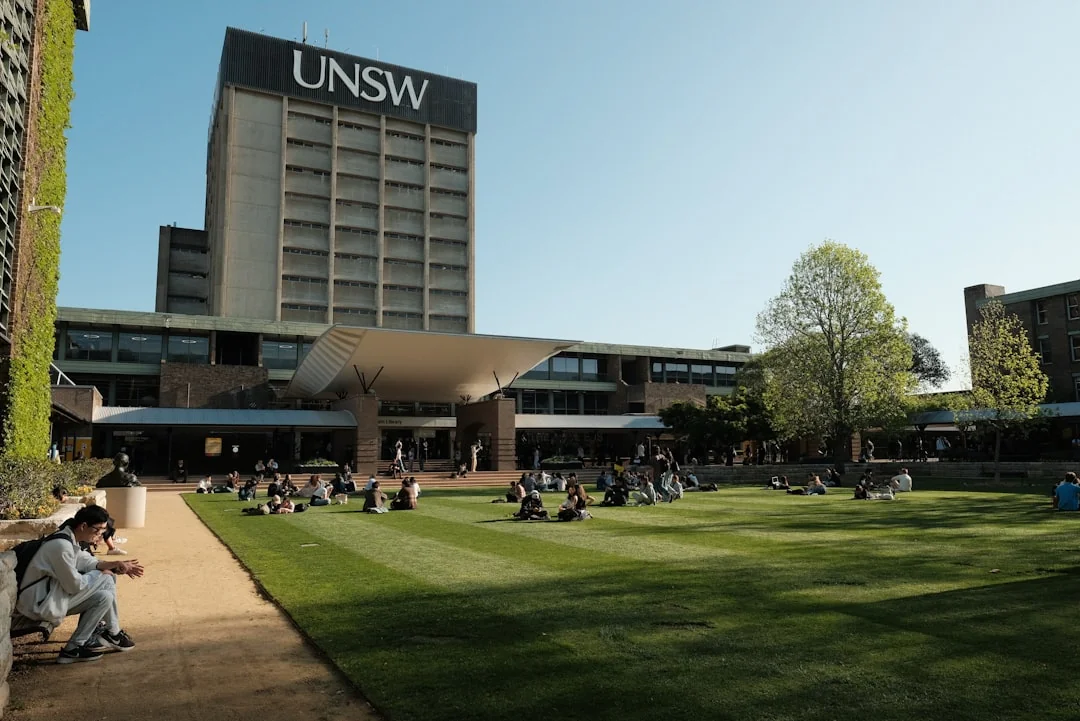
- The Group of Eight (Go8): The University of Melbourne, The University of Sydney, UNSW Sydney, The Australian National University (ANU), Monash University, The University of Queensland (UQ), The University of Western Australia (UWA), and The University of Adelaide.
- Australian Technology Network (ATN) & Top Public Universities: UTS Sydney, RMIT University, Queensland University of Technology (QUT), Curtin University, Deakin University, Wollongong University, and Macquarie University.
Applicants holding unconditional offers from these Level 1 universities experience visa approval rates exceeding 94%–98%, compared to sub-50% approval rates observed across unaccredited regional private colleges. Explore our personalized Australian university admission support to target high-trust institutions matching your academic profile.
3. Financial Capacity Proof: 2026 Cost Breakdown & Acceptable Funds
Demonstrating genuine financial capability is the single most critical component of your Subclass 500 visa application. The Australian Government increased the minimum annual living cost requirement to AUD $29,710 (an increase of ~21% from previous baselines) to ensure students can sustain themselves without depending on excessive part-time work.
Below is the official 12-month financial proof calculation formula mandated for a single student applicant:
| Expense Category | Required Amount (AUD) | Approx. Value in INR (₹) | Mandatory Evidence Document |
|---|---|---|---|
| 1 Year Living Costs | AUD $29,710 | ₹16,35,000 | Bank statement / Education loan sanction |
| 1 Year Tuition Fee | AUD $34,000 – $48,000 | ₹18,70,000 – ₹26,40,000 | CoE receipt + remaining 1st-year fee proof |
| Return Airfare Allowance | AUD $2,000 | ₹1,10,000 | Included in liquid funds proof |
| Overseas Student Health Cover (OSHC) | AUD $1,400 – $2,200 | ₹77,000 – ₹1,20,000 | Policy certificate (Allianz, Medibank, Bupa) |
| Total Minimum Fund Requirement | AUD $67,110 – $81,910 | ₹37,00,000 – ₹45,00,000 | Consolidated Proof of Funds Package |
Acceptable vs. Unacceptable Sources of Funds
The Australian High Commission is extremely strict about the pedigree of financial documents. Here is what is accepted and what will trigger a refusal:
- ✅ Gold Standard — Education Loans: Sanction letters from public sector banks (State Bank of India, Bank of Baroda, Punjab National Bank) or premier RBI-regulated private NBFCs (HDFC Credila, Avanse, Axis Bank). Need assistance with zero-margin education loan sanctions? Review our dedicated study abroad education loan desk.
- ✅ Seasoned Bank Savings: Savings account deposits held for a minimum of 3 to 6 months with continuous transaction history, backed by 3 years of Income Tax Returns (ITRs) of the sponsor (Parents/Sponsor earning minimum ₹8–₹12 Lakhs/year).
- ✅ Fixed Deposits (FDs): Fixed deposits in nationalized or scheduled commercial banks held for at least 3 months, accompanied by a bank confirmation letter confirming the FD can be liquidated at any time without penalty.
- ❌ Strictly Rejected: Unverified cooperative bank deposits, post office accounts without digital verification, gold valuation certificates, agricultural land valuation without IT proof, and sudden third-party private transfers into the student's account.
4. Cracking the Genuine Student (GS) Requirement (Replacing GTE)
On March 23, 2024, Australia permanently retired the old Genuine Temporary Entrant (GTE) statement and replaced it with the Genuine Student (GS) requirement. Unlike the subjective GTE essay that often invited generic AI-generated templates, the GS framework consists of 4 mandatory, targeted questions (up to 150 words each) embedded directly within the ImmiAccount application form.
Question 1: Current Circumstances & Ties to India
What DHA wants: Concrete details of your current employment or academic status in India, family business ties, financial assets, and personal/community obligations that tie you to your home country. State your parents' profession, household stability, and explain why you are not studying a similar course in India (e.g., lack of specialized practical curriculum or industry labs).
Question 2: Why Australia & Why This Specific University?
What DHA wants: Specific, research-backed reasons. Avoid generic praises like "Australia is a beautiful multicultural country." Mention the exact CRICOS course code, faculty research publications, specialized electives, campus facilities, and compare it against similar programs in the US, UK, or Germany. Our editorial team provides 1-on-1 support through our SOP & Profile Building Service.
Question 3: Realistic Career Value & Return on Investment (ROI)
What DHA wants: A clear professional roadmap. Detail the target job roles in India (e.g., "Senior Data Engineer at multinational firms like TCS, Infosys, or Microsoft India"), expected entry salaries (e.g., ₹18–₹25 Lakhs per annum), and explain how the Australian degree provides a measurable career acceleration over domestic credentials.
Question 4: Immigration History & Additional Background
What DHA wants: Complete disclosure of all past international visa applications, including any historical visa refusals (e.g., US F-1 or Canada study permits). Failure to disclose a past visa refusal is treated as identity fraud under Public Interest Criterion (PIC) 4020, resulting in a mandatory 3 to 10-year ban.
5. Anti-Visa Hopping Laws: What Students Must Know
To eliminate back-door immigration tactics, the Australian Government banned onshore visa switching from specific visa subclasses:
- Visitor Visa (Subclass 600) to Student Visa: Individuals who enter Australia on a tourist or visitor visa can no longer apply for a Subclass 500 student visa onshore. You must apply for your student visa from India before travelling.
- Temporary Graduate Visa (Subclass 485) to Student Visa: Graduates whose post-study work visas are expiring can no longer "hop" back onto a student visa to extend their onshore stay. They must either qualify for a skilled employer-sponsored visa (Subclass 482/186), skilled independent points-based migration (Subclass 189/190/491), or depart Australia.
- Course Downgrading Bans: Students who arrive in Australia on a Master's or Bachelor's visa are prohibited from downgrading to vocational diploma courses without obtaining prior written approval and a new visa.
6. Updated English Language Requirements (IELTS & PTE)
The minimum English language test score thresholds for Australian student visas are strictly enforced:
- Direct University Entry (Bachelor's & Master's): Minimum IELTS 6.5 overall (with no sub-band below 6.0) or PTE Academic 58+ (with no communicative skill score below 50).
- Packaged ELICOS (English Language Courses): Minimum IELTS 5.5 (or PTE 42) required if packaged with up to 10–20 weeks of English language preparation.
- Test Validity: Test scores must have been completed within 2 years of the visa lodgement date. Score reporting must be verifiable directly via the testing body's digital portal. Prepare thoroughly with our master tutors via IELTS & PTE Test Preparation Classes.
7. Post-Study Work Rights (Subclass 485) Reality Check
Australia continues to offer one of the most generous post-study work visa frameworks in the world under the Temporary Graduate Visa (Subclass 485) - Post-Higher Education Work Stream:
- Bachelor's Degree Graduates: 2 Years full work authorization across Australia.
- Master's by Coursework Graduates: 2 Years full work authorization.
- Master's by Research & PhD Graduates: 3 Years full work authorization.
- Regional Australia Extension Bonus: Students who study, live, and work in designated regional areas (such as Adelaide, Perth, Gold Coast, Newcastle, Wollongong, and Geelong) receive an additional 1 to 2 years of Subclass 485 visa extension!
8-Step Action Roadmap for 2026/2027 Australian Admissions
Step 1: Academic Profile & University Selection (6–8 Months Prior)
Shortlist 3 to 5 universities prioritizing Evidence Level 1 institutions (Go8 and leading public universities) aligned with your Bachelor's background and career ambitions. Check our country guide on studying in Australia.
Step 2: English Testing & University Offer Acceptance
Achieve the required IELTS (6.5+) or PTE (58+) score. Submit academic transcripts, marksheets, and identity proof to secure your Conditional Offer Letter.
Step 3: University Genuine Student (GS) Financial Screening
Australian universities conduct internal GS audits before issuing a Confirmation of Enrolment. Submit your education loan sanction letter, bank statements, and draft GS answers for university compliance clearance.
Step 4: Fee Deposit & Confirmation of Enrolment (CoE)
Transfer your initial tuition deposit (typically 1st semester tuition, approx. AUD $16,000–$22,000) and purchase your Overseas Student Health Cover (OSHC). The university will issue your official electronic Confirmation of Enrolment (eCoE).
Step 5: Visa Lodgement via ImmiAccount
Create an online application on the Department of Home Affairs ImmiAccount portal. Complete all biographical sections, input the 4 GS question responses, attach all certified color scans of financial proofs, and pay the Subclass 500 visa application fee.
Step 6: Biometrics (VFS Global) & Medical Examination
Book your biometrics appointment at your nearest VFS Global visa application centre in India (New Delhi, Mumbai, Hyderabad, Bengaluru, Chennai, Kolkata, Ahmedabad, etc.). Complete your medical screening with an authorized eMedical panel physician using your HAP ID.
Step 7: Visa Grant & Pre-Departure Preparation
Upon receiving your Subclass 500 Visa Grant Letter (containing your Visa Grant Number and conditions such as 8105 work limitation and 8501 health insurance), finalize your student flights, Forex card, accommodation, and international SIM card with our Pre-Departure & Settling Support.
Global Destination Comparison: Australia vs. Germany, USA, UK & Canada
Choosing the right overseas destination depends on balancing your budget, post-study work flexibility, and career trajectory. Here is how Australia stacks up against other top countries for Indian Master's students in 2026:
- Australia: 2–4 years PSW, high starting salaries (AUD $75,000–$95,000), 48 hrs/fortnight part-time work rights, and clear regional immigration pathways. Ideal for engineering, IT, nursing, and business analytics.
- Germany: Zero tuition at public universities, 18-month jobseeker visa, blocked account of €11,904/yr. Check our in-depth list of 8 Low-Tuition Public Universities in Germany for Master's Degrees.
- United States: 3-year STEM OPT work authorization, highest tech salaries globally, H-1B lottery transition. Explore our US STEM OPT & H-1B Visa Strategy Guide.
- Canada: 3-year PGWP, category-based Express Entry PR draws for healthcare and STEM grads. Review our 7 Fast-Track Canadian PR Pathways Guide.